
Joining Aluminum Using Ultrasonic Welding
Aluminum is increasingly being used in automotive electrical systems and other electrical applications where weight, installation space, and cost are key factors. At the same time, bonding aluminum places greater demands on the joining process than bonding copper.
One possible solution is ultrasonic welding. In this process, metallic materials are joined together under contact pressure and high-frequency mechanical vibration. The process takes place without completely melting the parts being joined. With suitable material combinations and process conditions, this method can be used to produce reproducible electrical and mechanical joints. [4][5]
However, the welding process alone is not the decisive factor. The material combination, conductor cross-section, geometry, surface condition, sonotrode, anvil, and process parameters must all be coordinated and validated for the specific application.
Aluminum in the Vehicle Electrical System: Why This Material Is Interesting
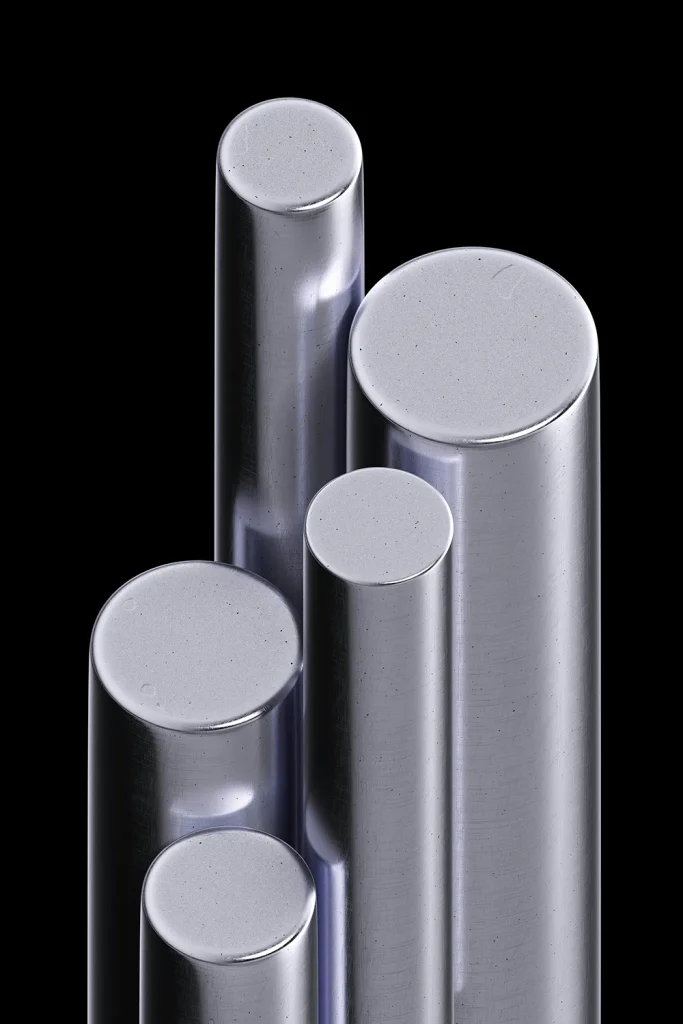
Aluminum has a significantly lower density than copper. Typical density values for aluminum alloys are around 2.7 g/cm³, while copper has a density of about 8.9 g/cm³. [1][2]
For electrical wiring, this means that aluminum can result in significant weight savings when the conductor cross-section is designed appropriately. At the same time, aluminum has lower electrical conductivity than copper, so a larger conductor cross-section may be required for the same electrical application, depending on the specific use. [1][2][3]
This means that aluminum is not necessarily a substitute for copper. Rather, the appropriate choice of material depends on the electrical, mechanical, thermal, and design requirements of the specific application.
What challenges does aluminum present when it comes to making electrical connections?
Oxide layer on the surface
Aluminum forms a thin oxide layer very quickly when exposed to air. This surface differs significantly from the underlying metal in terms of its electrical and mechanical properties.
When making an electrical connection, it is therefore essential to ensure that a sufficiently robust metallic bond is formed at the joint.
In ultrasonic welding, the oscillating motion and the contact pressure promote plastic deformation of the contact surfaces. Studies of Al-Cu joints show that the oxide layer can be broken up and distributed throughout the joint area during this process. Thus, it is not simply „removed“ entirely, but its influence on contact formation is reduced by local deformation and material movement. [4][5]
Mechanical Properties
Aluminum is relatively soft and has different mechanical properties than copper. Therefore, the force, amplitude, and process duration must be adjusted to the specific material combination.
If the process energy is too low, it can result in an insufficient contact area. Conversely, if the mechanical stress is too high, it can cause unnecessary deformation of the conductor or the joint.
Contact Corrosion in Aluminum and Copper
When aluminum and copper are joined directly, the different electrochemical behavior of the two materials must also be taken into account.
Under certain conditions, galvanic corrosion can occur. The risk depends, among other factors, on humidity, the electrolyte, geometry, surface condition, and the specific combination of materials.
For this reason, a Cu-Al alloy should not be evaluated solely on the basis of its initial electrical conductivity. For applications with more stringent requirements, long-term behavior, environmental conditions, and appropriate protective measures must also be taken into account.

How does ultrasonic welding of aluminum work?
Ultrasonic welding of metals is a solid-state joining process. The parts to be joined are brought into contact with each other under a defined contact force and, at the same time, moved relative to one another by a high-frequency mechanical vibration. [4][5]
In simple terms, the process can be broken down into several steps:
1. The workpieces are positioned between the sonotrode and the anvil.
2. A defined contact force establishes contact between the parts to be joined.
3. The sonotrode generates a mechanical vibration parallel to the joining surface.
4. Local plastic deformation and relative motion cause changes in the surface structures.
5. Oxide layers and impurities can be broken up and dispersed in the joint area.
6. Larger and larger metallic contact areas form, ultimately resulting in a durable connection. [4][5]
7. The exact joining process depends heavily on the material, geometry, and process parameters. Therefore, the principle should not be understood as a universally identical procedure for all applications.
Ultrasonic Welding Compared to Thermal Joining Processes
A key difference from conventional fusion welding processes is that ultrasonic welding does not require the base materials to be completely melted.
This allows, in particular, thin metallic components, strands, foils, and conductors to be joined with comparatively low thermal stress. Studies of Al-Cu joints also show pronounced local plastic deformation and material movement in the joint area. [4][5]
However, this does not mean that ultrasonic welding is automatically the better solution for every application. Its suitability must be evaluated based on the specific materials, geometries, requirements, and process objectives.
| Criterion | Ultrasonic welding | Thermal Welding |
| Heat input | locally confined | often higher |
| Melting | not required | required depending on the procedure |
| Process time | often short | depending on the procedure |
| Material Combinations | Different metals are also possible | highly dependent on the procedure |
| Deformation | local | depending on the heat input |
| Process Monitoring | can be easily achieved by adjusting process parameters | depending on the procedure |
Ultrasonic Welding of Aluminum and Copper
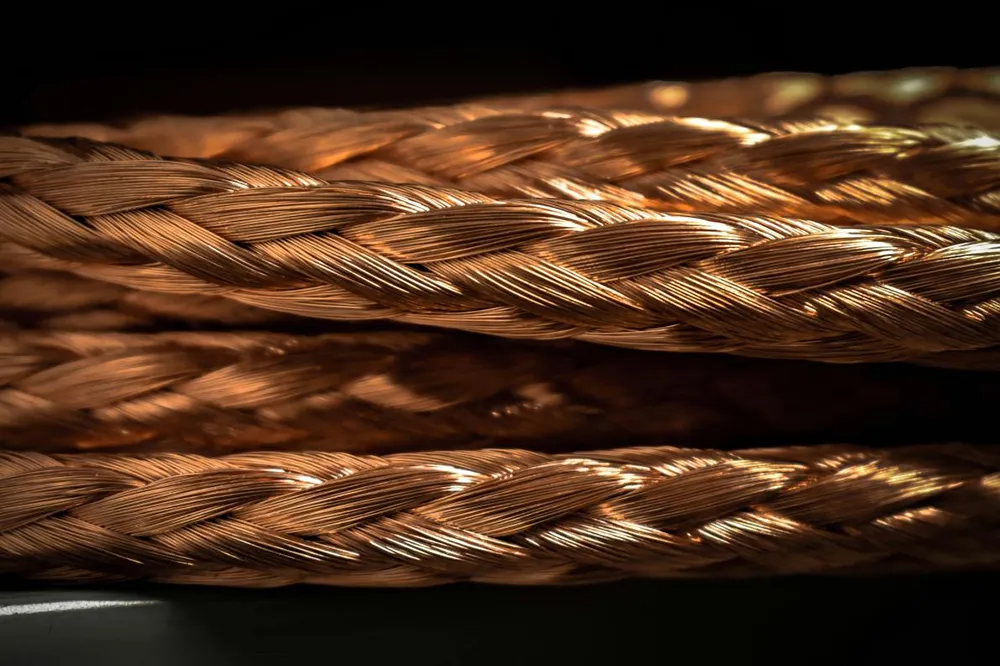
The combination of aluminum and copper is particularly interesting. It can be relevant, for example, in situations where aluminum conductors need to be connected to copper terminal components.
However, Al-Cu joints are technically more challenging than joints made of the same materials. One reason for this is the potential formation of intermetallic phases at the interface.
Scientific studies show that, under suitable conditions, a metallic bond can be formed during the ultrasonic welding of aluminum and copper. At the same time, intermetallic compounds—including Al₂Cu—have been observed at the interface under certain process conditions. [4][5][6][7]
The short processing times and the comparatively limited thermal stress make it possible to influence the extent of intermetallic phase formation. However, whether and to what extent such phases form depends on the specific process conditions and must be investigated for each individual application. [6][7]
What are the advantages of ultrasonic welding?
In suitable applications, ultrasonic welding of aluminum can offer the following advantages:
- low thermal stress on the joining components
- No complete melting required
- Short processing times are possible
- Suitable for various metallic materials
- ease of automation
- Capability for continuous process monitoring
- Reproducible compound within a stable process window
Particularly in the case of electrical conductors, electrical contact resistance is an important quality parameter in addition to mechanical strength.
Where are the limits?
Ultrasonic welding is not a universal process for every aluminum joint.
The connection quality you can achieve depends, among other things, on:
- Aluminum alloy and copper material
- Conductor Cross-Section and Geometry
- Number and Configuration of the Strands
- Surface condition
- Contact force
- Vibration amplitude
- Process energy
- Duration of the process
- Sonotrode and Anvil Geometry
- Clamping and Positioning
Particularly when working with different materials, the process window must be determined experimentally and then validated.
Which process parameters are critical?
In ultrasonic welding, several parameters are interrelated.
Amplitude
Amplitude describes the mechanical oscillatory motion of the sonotrode. Increasing the amplitude can enhance the relative motion and plastic deformation in the joint area.
However, it should not be considered in isolation. A high amplitude is not automatically better, as it can also lead to increased material deformation and tool stress.
Contact force
The contact force establishes contact between the joining partners and influences the conditions of friction and deformation.
Insufficient force can lead to inadequate contact. Excessive force, on the other hand, can cause excessive deformation.
Duration of the process
As the duration of the process increases, the contact area and the local microstructure change. Studies of Al-Cu joints, for example, show that a longer welding time can influence the formation and development of the joint zone. [3][6]
Therefore, the longest possible welding time is not necessarily optimal. What matters most is a stable process within an appropriate process window.
Energy
The energy input can be used as an additional process indicator. In automated systems, for example, time, power, energy, and other process signals can be monitored and documented.
Process Monitoring and Quality Assurance
In industrial manufacturing, it is not enough to simply produce a single successful welded joint. The key factor is the reproducibility of the process.
Depending on the system and application, the following parameters, for example, can be monitored:
- Welding time
- Amplitude
- Strength
- Energy
- Power
- Generator and Process Signals
- characteristic process curves
By monitoring appropriate process parameters, deviations can be detected early and components that show abnormalities can be sorted out.
Which parameters should actually be monitored depends on the machine being used and the quality requirements of the product in question.
How is an ultrasonic weld tested?
A robust qualification should take several aspects into account.
Mechanical Testing
Depending on the component's geometry, tests such as tensile, shear, or pull-out tests are used.
This involves determining the mechanical load the joint can withstand and how the joint fails.
Electrical Testing
For electrical conductors, the electrical resistance of the connection is an important indicator of quality.
A low and reproducible contact resistance is particularly important at high currents, since additional power loss can lead to localized heating.
Metallographic Analysis
During development and qualification work, a cross-section can provide additional information about the joint.
This allows for the examination of, for example, deformation, the contact zone, material flow, and possible intermetallic phases. Particularly in the case of Al-Cu joints, such microstructural analysis can provide important information about the actual joining process. [4][6][7]
Crimping or ultrasonic welding?
Crimping and ultrasonic welding employ different joining strategies, and depending on the application, both can be appropriate.
In crimping, the connection is formed by a controlled mechanical deformation of the conductor and the contact. This process has been established in automotive electrical systems for many years.
In ultrasonic welding, on the other hand, a metallic bond is formed through mechanical vibration and pressure.
Which process is more suitable depends, among other things, on the conductor structure, contact geometry, electrical requirements, installation space, production concept, and required process monitoring.
For this reason, ultrasonic welding should not be viewed across the board as a substitute for crimping. In certain applications, however, it can be a technically interesting alternative or supplement.
How long does ultrasonic welding take?
The processing time depends on the material, cross-section, geometry, welding system, and the set parameters.
For example, scientific studies on Al-Cu ultrasonic welds have examined process times in the range of less than one second. [3][6]
However, these values should not be taken as a general guideline for every industrial application. For a specific compound, the required process time must be determined experimentally and validated.
Is an ultrasonic welded joint gas-tight or watertight?
Depending on the component geometry and process design, an ultrasonic weld can produce a very tight joint.
If leak tightness is a technical requirement, it must be tested for the specific component geometry and intended application and verified using an appropriate test method.
What is crucial for mass production?
Just because a compound works in the lab doesn't mean the process is ready for mass production.
Before mass production begins, the following points, among others, should therefore be verified:
- appropriate combination of materials
- Reproducible component geometry
- appropriate tool
- stable process window
- mechanical strength
- electrical contact resistance
- Effects of Aging and Environmental Factors
- potential corrosion
- Process Monitoring
- Testing and Documentation Plan
Particularly for Al-Cu alloys, long-term stability under actual operating conditions should be taken into account.
Conclusion
Due to its low density, aluminum offers interesting opportunities for reducing the weight of electrical wires and components. At the same time, the oxide layer, mechanical properties, and—in the case of connections with copper—the differing electrochemical behavior place special demands on the contact design.
Ultrasonic welding is a solid-state joining process that can be used to join aluminum as well as various material combinations, such as aluminum and copper. The joint is formed through the interaction of contact pressure, mechanical vibration, plastic deformation, and material contact. [4][5]
However, the process alone is not the sole determining factor for reliable industrial application. Only the combination of suitable tooling technology, optimized process parameters, process monitoring, and reproducible quality control enables a stable mass-production process.
Particularly in the case of Al-Cu alloys, potential intermetallic phases and long-term behavior must also be taken into account and verified through appropriate testing. [6][7]
Ultrasonic Welding for Electrical Conductors
Magntek develops and supplies solutions for industrial ultrasonic welding. Depending on the application, the focus is on the design of the welding process, the appropriate tooling technology, and reproducible process control.
Would you like to determine whether your aluminum, copper, or aluminum-copper joint is suitable for ultrasonic welding?
Talk to our specialists and discuss your specific application.
Sources
[1] The Aluminum Association: International Alloy Designations / Teal Sheets.
[2] Copper Development Association: Copper Development Guide – Physical Properties.
[3] Liu, J.; Cao, B.; Yang, J.: “Texture and Intermetallic Compounds of Cu/Al Dissimilar Joints Formed by High-Power Ultrasonic Welding.” Journal of Manufacturing Processes, Vol. 76, 2022, pp. 34–45. DOI: 10.1016/j.jmapro.2022.02.001.
[4] Wu, X.; Liu, T.; Cai, W.: “Microstructure, welding mechanism, and failure of Al/Cu ultrasonic welds.” Journal of Manufacturing Processes, Vol. 20, 2015, pp. 321–331. DOI: 10.1016/j.jmapro.2015.06.002.
[5] Fujii, H. T.; Endo, H.; Sato, Y. S.; Kokawa, H.: “Interfacial microstructure evolution and weld formation during ultrasonic welding of Al alloy to Cu.” Materials Characterization, Vol. 139, 2018, pp. 233–240. DOI: 10.1016/j.matchar.2018.03.010.
[6] Liu, J.; Cao, B.; Yang, J.: “Modeling intermetallic phase growth during high-power ultrasonic welding of copper and aluminum.” Journal of Manufacturing Processes, Vol. 35, 2018, pp. 595–603. DOI: 10.1016/j.jmapro.2018.09.008.
[7] “Microstructure Evolution and Analysis of Mechanical Properties in Dissimilar Ultrasonic Metal Welding of Aluminum to Copper.” Journal of Materials Research and Technology, Vol. 30, 2024, pp. 2922–2935. DOI: 10.1016/j.jmrt.2024.04.037.